

Bonka Bird Toys Blog
The Bright & The Bare: Finding the Right Balance for Your Bird
Birds are naturally curious and love to chew. They are drawn to colorful objects but their toys also end up in their beaks, so safety matters. Natural toys made from untreated wood, palm leaf and loofah are eco‑friendly and safe, while colored toys add visual stimulation – as long as the dyes are non‑toxic. In this guide we explore when to choose natural versus colored toys, how to combine them, and our favorite Bonka Bird Toys for every play style.

What You’ll Learn
Why Colors Matter to Birds
Parrots and other pet birds are highly visual. They use vibrant plumage to communicate in the wild and are naturally drawn to colorful objects. Safe colored toys engage their curiosity and encourage play, especially for birds that need extra stimulation. According to Best Friends Animal Society, birds love to chew wood and are particularly attracted to colors – but only if the dyes are non‑toxic. That means properly dyed toys can help reduce boredom and provide an outlet for chewing and shredding.
Colorful toys also help you introduce new textures and shapes to your bird’s environment. Rotating bright toys with plain ones prevents habituation and keeps playtime exciting. However, always verify the dyes: vegetable‑based or food‑grade coloring is safe; avoid painted wood or plastics with unknown chemicals.
Benefits of Natural Toys
Natural toys are made from untreated woods, plant fibers and renewable materials like coconut, sola, palm leaf and loofah. They are free from toxic dyes and glues and can be composted when worn out. EcoFurball notes that plastic toys and toxic dyes pose health risks and contribute to environmental waste – switching to natural toys protects your bird’s health and reduces your ecological footprint. Good natural toys use untreated hardwoods, vegetable‑based dyes, hemp or cotton ropes and stainless‑steel connectors.
Because these toys resemble items birds would encounter in nature, they encourage instinctive behaviors like shredding, foraging and gnawing. Unfinished woods and loofah sponges help condition beaks and satisfy chewing needs. Natural fiber shredders made from palm leaf or seagrass provide endless shredding fun without synthetic threads. Plus, many natural toys are biodegradable – when they’re worn out you can compost or recycle the parts, reducing waste.
Benefits of Colored Toys
Brightly colored toys capture your bird’s attention and stimulate play. The visual contrast encourages your bird to explore new shapes, textures and movements, which can help reduce stress and aggression. When choosing colored toys, look for products dyed with water‑based food coloring or vegetable dyes; avoid painted or varnished wood with unknown chemicals. Eco‑friendly brands specifically use vegetable‑based dyes instead of synthetic colorants.
Colored toys also make it easier for you to spot when a toy is worn out or soiled, so you can replace it promptly. Many colored toys incorporate bells or moving parts to add auditory enrichment. Just remember to inspect them regularly; glues, paints and low‑quality metal parts can be hazardous. When in doubt, test a toy by running water over it – if the colors run, it’s likely made with food‑grade dye and safe for your bird.
How to Choose the Right Toy
- Know your bird’s play style: Chewers love natural wood, loofah and sola pieces; shredders enjoy palm leaf and paper cups; climbers and swingers appreciate colored ladders and spirals. Offer a mix to keep them engaged.
- Check material safety: Avoid PVC, nylon rope, rubber and toys with synthetic glues or dyes. Choose vegetable‑dyed wood, cotton or hemp rope and stainless‑steel hardware.
- Match the size: Select toys sized to your bird’s beak and feet to prevent choking. Larger birds can handle bigger blocks and heavy pods, while small parrots prefer lightweight sola balls and colored sticks.
- Rotate regularly: Birds become bored quickly. Rotate toys weekly to maintain novelty and remove any pieces once they become frayed or small enough to swallow.
- Combine natural and colored: You don’t have to choose one or the other. Provide both natural textures and colorful accents to give your bird a variety of experiences. Just ensure all components are bird‑safe.
Pick Safe, Engaging Toys Your Bird Will Love
Your feathered friend deserves toys that are safe, durable and stimulating. Whether you prefer the rustic charm of natural materials or the eye‑catching allure of colorful pieces, Bonka Bird Toys has an option to delight every bird. Our toys use untreated woods, natural fibers and vegetable‑based dyes to guarantee safety and fun. Explore our collections below and find the perfect balance of textures and colors for your feathered friend.
Browse All Toys
2755 Mahogany Chomp
Natural mahogany pods combined with brightly dyed wood bars and leather lace for a crunchy, foraging toy.
Shop Now
1201 Earth Bite Tower
Layers of coconut shell, loofah, and sola balls offer a variety of textures for chewing and shredding.
Shop Now
1931N Natural Three Cake
Three sola balls nestled in paper cups with a shreddable skirt—perfect for gentle beaks and natural foraging fun.
Shop Now
1331 Big Step Tower
A colorful tower of wooden slats with a bell encourages climbing, swinging and chewing.
Shop Now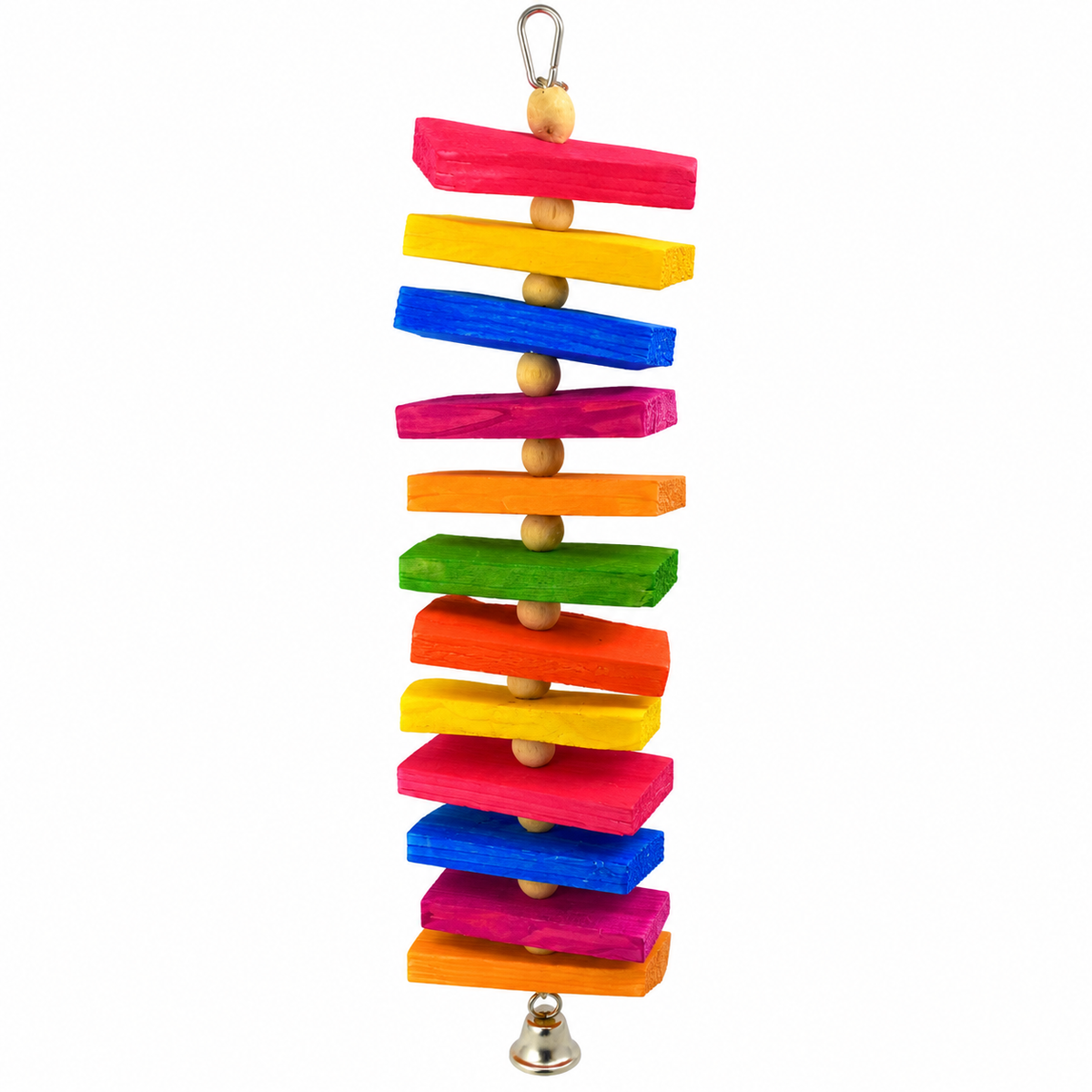
2335 Large Slat Chewer
A vertical ladder of bright wood blocks separated by natural beads and finished with a bell for audio enrichment.
Shop Now
2908 Mini Rainbow Sticks
Dozens of colored sticks twist into a helix for climbing, twisting and chewing. A bell adds gentle sound to playtime.
Shop NowShare This Article
Do you know someone who’s debating between natural and colored toys for their bird? Use the buttons below to share this post or send it directly to a friend: