

Bonka Bird Toys • Enrichment guide
Give a curious beak something worth exploring.
The best bird toys for mental stimulation and enrichment give your bird opportunities to investigate, pull, chew and forage. Start with the activity your bird already enjoys, then introduce a different texture or a manageable new challenge.
This guide compares six Bonka Bird Toys so you can choose with purpose: a hanging shredder, a moving foraging toy, soft sola, a natural-material box or a textured chewing board. Our picks are organized by play style, rather than a universal ranking.
Find your bird’s matchExplore foraging toys
What makes a bird toy mentally stimulating?
A toy becomes interesting when your bird can do something with it. Pulling paper through an opening, exploring an unfamiliar texture or finding a visible reward turns an object into an activity. Different birds find different tasks rewarding, so watch what yours chooses to revisit.
Foraging bird toys provide places to search and investigate. Shredding toys offer material to pull apart. Chewing toys add texture and resistance. A useful bird enrichment setup combines activities your bird can succeed at with new options introduced gradually.
Destructible toys have a place in that mix. Soft sola and paper are meant to wear down; a toy does not need to remain intact forever to provide worthwhile play. Compare the interest it creates, its suitability and how often it needs replacing when deciding what to buy.
Quick comparison: which bird toy should you choose?
Use this shortlist to narrow your choice, then check the linked product details for fit. Dimensions below come from Bonka’s listings and are approximate.
| Toy | Choose for | Fit check |
|---|---|---|
|
1042 Duo Foraging Heart |
Colorful hanging exploration | Approximately 12.5 × 5.5 × 1.5 inches; marketed for medium birds. |
|
2433 Stuff Triple Chain Ball |
Pulling and investigating | Approximately 11 × 8 × 8 inches; check cage clearance and your bird’s interaction with plastic. |
|
1925N Natural Cake |
Soft shredding textures | Approximately 7 inches tall; marketed for small to medium birds. |
|
2028 Natural Foraging Bonka Box |
Exploring a variety of materials | Approximately 7.5 inches square × 2 inches deep; marketed for small to medium birds. |
|
1423 Mahogany Munch Board |
Chewing across mixed textures | Approximately 12 × 4 × 2 inches; marketed for small to medium birds. |
|
974 Pk3 Small Sola Cubes |
A simple soft-texture option | Confirm current dimensions, pack details and suitability with Bonka before ordering. |
Six Bonka Bird Toys for mental stimulation and enrichment
1. 1042 Duo Foraging Heart
Our pick for colorful hanging exploration

Two vine hearts, shreddable paper and bamboo finger traps give curious birds several textures to investigate. The hanging format suits a bird that already enjoys pulling and picking at toys.
Choose this for a bird that seeks out paper and woven textures. Allow room around the toy so the bird can approach comfortably.
View 1042 details2. 2433 Stuff Triple Chain Ball
Our pick for pulling and investigating

Three perforated plastic balls hold colorful shreddable paper and hang from plastic chains. This is a useful choice for birds that enjoy working at openings and pulling out visible material.
Choose this when your bird enjoys tugging and moving parts. Inspect the balls and chains regularly; remove the toy if plastic becomes cracked or develops sharp edges.
View 2433 details3. 1925N Natural Cake
Our pick for soft shredding textures

A soft sola ball, paper cupcake cups and crinkle paper create a lightweight hanging toy with layers to explore. The mix offers an approachable alternative for birds that prefer softer material.
Choose this if your bird likes tearing paper and working through soft textures. Expect shredding and replacement as part of normal use.
View 1925N details4. 2028 Natural Foraging Bonka Box
Our pick for exploring a variety of materials

This cardboard box brings together textures such as sola, balsa, mahogany, vine and paper. Its open format makes the contents easy to inspect and gives you a starting point for a supervised foraging session.
Choose this when you want to discover which textures interest your bird. Begin with accessible items, and remove soiled material after play.
View 2028 details5. 1423 Mahogany Munch Board
Our pick for chewing across mixed textures

A fluted cardboard base holds mahogany chunks and pods attached with leather strands. The board format offers different surfaces for birds that enjoy methodically picking, chewing and dismantling.
Choose this for a bird that returns to cardboard and textured natural pieces. Monitor the attachments and replace the toy when wear exposes unsafe parts.
View 1423 details6. 974 Pk3 Small Sola Cubes
Our pick for a simple soft-texture option

The supplied product image shows three pale sola cubes with a textured surface. Consider these when your bird prefers a simple object to explore rather than a suspended cluster.
Choose this as a candidate for a soft-material rotation. Compare the actual cube size with your bird’s beak and handling style before use.
View 974 detailsHow to choose enrichment toys your bird will use
Start with observed preferences. Does your bird pull at paper, inspect openings or work along cardboard edges? Choose one toy that matches that behavior before adding a new format. Buying all six at once is not necessary to start a useful rotation.
Check the whole setup. Toy dimensions, openings, attachments and your bird’s chewing strength matter alongside species. A toy described for small to medium birds still needs an individual fit check. Keep access to food, water and perches clear, and leave room for movement.
Plan for replacement. If your bird enjoys soft material, budget for fresh shreddables. If it bites through plastic, consider a more appropriate material instead of assuming a hanging plastic toy will suit it.

A simple routine for daily bird enrichment
- Choose one starting texture. Offer a familiar material in a manageable format. Keep a favorite toy available while introducing something new.
- Introduce gently. Let your bird look at the toy from a comfortable distance. Move at its pace and avoid forcing contact.
- Make the first challenge easy. Where appropriate for the toy, place a small amount of your bird’s usual food visibly among accessible material. Keep normal food available; do not make a beginner solve a puzzle to meet its needs.
- Watch the response. Notice voluntary approaches, successful interaction and repeated interest. If the challenge is ignored or frustrating, simplify it or try a different texture.
- Rotate thoughtfully. Refresh one item at a time as interest and wear suggest. Inspect toys daily and remove broken, sharp, frayed, soiled or swallowable damaged pieces.

Start with one favorite, then add a different activity
For a bird that enjoys soft shredding, consider the 1925N Natural Cake. If your bird is already interested in pulling material from openings, compare the 2433 Stuff Triple Chain Ball. For exploring several natural textures in one place, review the 2028 Natural Foraging Bonka Box.
Once you know what gets used, add a contrasting format. A hanging toy and an accessible supervised play activity can offer different experiences without filling every available space.
Choose your next enrichment toyRelated Products
Explore the featured toys below. Follow each link for purchasing options and current availability.


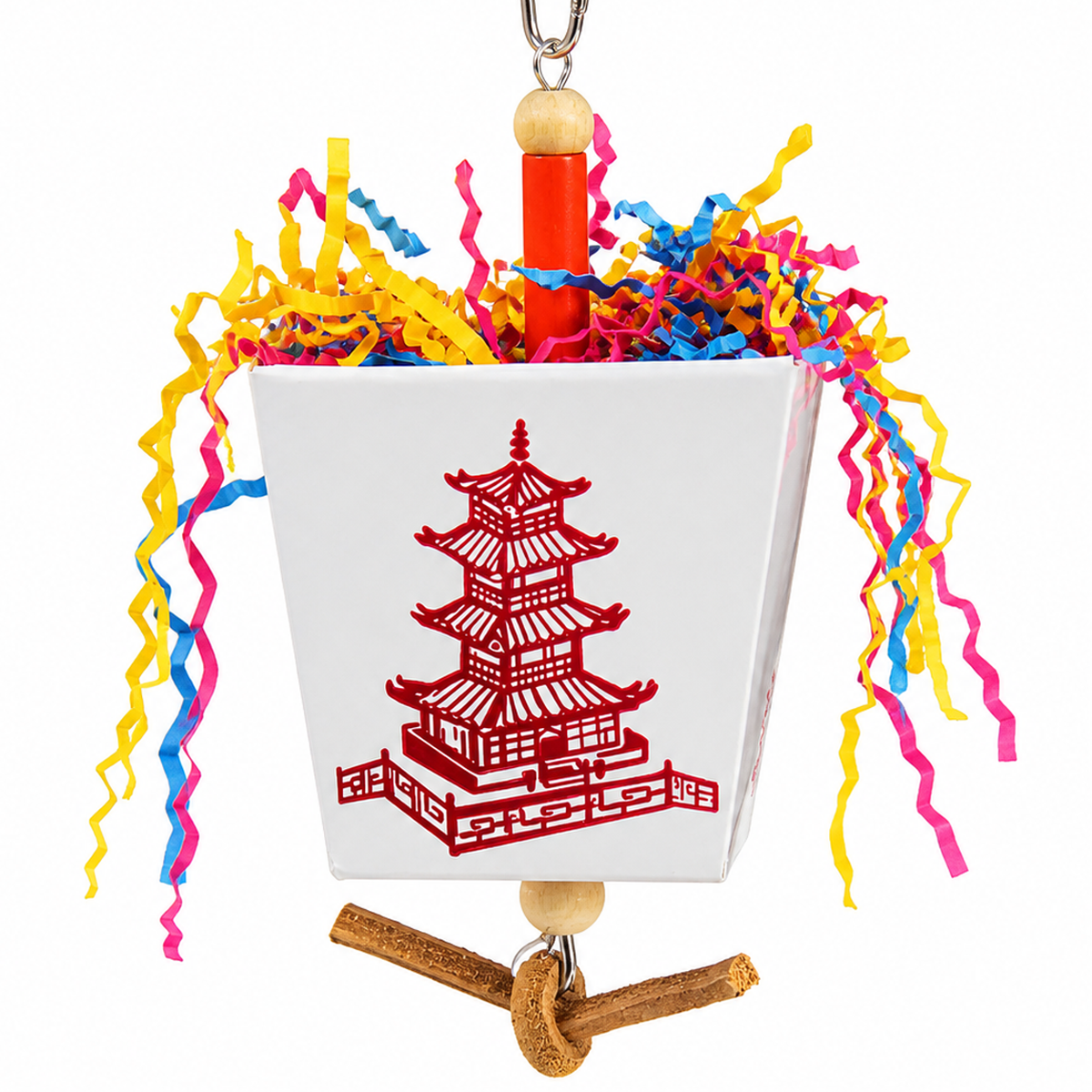
Frequently asked questions
What are the best bird toys for mental stimulation?
Choose toys that let your bird investigate, manipulate or search, with a difficulty it can manage. Foraging, shredding and chewing options offer different activities. Begin with your bird’s existing preferences and build variety from there.
Which toys should I consider for a cockatiel or budgie?
Start by comparing the fit and materials of options marketed for small to medium birds, such as the Natural Cake or Natural Foraging Bonka Box. Check actual dimensions, component sizes and your individual bird’s play habits before choosing.
Are sola cubes intended to last like hardwood?
Sola is a soft material chosen for chewing and shredding. Expect it to break down during use and replace it when needed. Select it for the activity it offers rather than long-lasting resistance.
How often should I rotate bird toys?
Let your bird’s interest and the toy’s condition guide you. Check daily for wear and try changing one item at a time while retaining something familiar. A fixed schedule is less useful than observing what your bird actually uses.
Can I add food to a foraging toy?
Where the design permits, use a small portion of your bird’s usual food and begin with easy access. Keep the toy clean, remove leftover food and continue normal feeding. Avoid packing openings so tightly that the task becomes inaccessible.